Your Wickard v filburn summary images are available in this site. Wickard v filburn summary are a topic that is being searched for and liked by netizens today. You can Download the Wickard v filburn summary files here. Find and Download all free photos and vectors.
If you’re searching for wickard v filburn summary pictures information connected with to the wickard v filburn summary topic, you have visit the right blog. Our site frequently gives you hints for downloading the highest quality video and image content, please kindly surf and find more informative video articles and images that fit your interests.
Wickard V Filburn Summary. Filburn argued that because the excess wheat was produced for his own private consumption and never entered. October 13 1942 Decided. Decided November 9 1942. 111 1942 was a United States Supreme Court decision that dramatically increased the power of the federal government to regulate the economy.
 Wickard V Filburn Case Brief Odt Chad Hildebrand History 555 Case Brief Wickard V Filburn In The Early 1940s Wheat Production Was At A All Time High Course Hero From coursehero.com
122 1942 Brief Fact Summary. Argued May 4 1942. 111 1942 was a United States Supreme Court decision that dramatically increased the power of the federal government to regulate the economy. Justice JACKSON delivered the opinion of the Court. Case Summary of Wickard v. Filburn is in some ways the greatest exercise of the commerce power recognized by the Supreme Court.
Filburn plaintiff a small farmer was penalized pursuant to the Act for producing wheat in excess of the Acts quotas.
It recognizes no limitations other than those set forth in the Constitution. Filburn is in some ways the greatest exercise of the commerce power recognized by the Supreme Court. Perhaps the decision that best indicated how completely the Supreme Court had come in acquiescing to the nationalist economic philosophy of President Franklin Roosevelt and the Democratic majorities in both houses of Congress was Wickard v. Filburn an Ohio farmer who harvested wheat for home consumption and for sale was fined 117 for violating a federal scheme devised to limit wheat production. 111 1942 Wickard v. Penalties were imposed if a farmer exceeded the quotas.
 Source: study.com
Westlaw Delivery Summary Report for 14IP DateTime of Request. Filburn is in some ways the greatest exercise of the commerce power recognized by the Supreme Court. The Agriculture Adjustment Act of 1938 and its 1941 amendments established quotas for wheat production. Summary of this case from US. He claimed that he wanted thewheat for use on his farm including feed for his poultry and livestock.
Source: coursehero.com
Pending a referendum vote of farmers upon wheat quotas proclaimed by the Secretary of Agriculture under the Agricultural Adjustment Act of 1938 the Secretary made a radio address in which he. Filburn plaintiff a small farmer was penalized pursuant to the Act for producing wheat in excess of the Acts quotas. In this case a unanimous court speaking through Justice Robert Jackson upheld important features of the. He was fined under the Act. It involved a farmer who was fined by the United States Department of Agriculture and contested the federal governments authority to regulate his activities.
 Source: youtube.com
October 13 1942 Decided. Filburn plaintiff a small farmer was penalized pursuant to the Act for producing wheat in excess of the Acts quotas. Filburn was a test case. Justice JACKSON delivered the opinion of the Court. Wickard v Filburn case expanded the power of congress in regulating entities by providing that the power of Congress over interstate commerce is absolute and unrestricted and it may be applied to the fullest extent possible.
 Source: conlaw.us
He was given a wheat acreage allotment of 111 acres under a Department of Agriculture directive which authorized the government to set production quotas for wheat. Filburn is considered the Courts most expansive reading of Congresss interstate commerce power and has served as a broad precedent for direct congressional regulation of economic activity to the present day. Filburn was a case decided on November 9 1942 by the United States Supreme Court. Filburn plaintiff a small farmer was penalized pursuant to the Act for producing wheat in excess of the Acts quotas. Filburn is in some ways the greatest exercise of the commerce power recognized by the Supreme Court.
 Source: slideplayer.com
The goal of the business interests that financed the legal challenge all the way to the Supreme Court was to convince the Court to declare the entire. View 22 Wickard v. Wickard v Filburn case expanded the power of congress in regulating entities by providing that the power of Congress over interstate commerce is absolute and unrestricted and it may be applied to the fullest extent possible. It recognizes no limitations other than those set forth in the Constitution. He was given a wheat acreage allotment of 111 acres under a Department of Agriculture directive which authorized the government to set production quotas for wheat.
 Source: teacherspayteachers.com
Clark of Dayton Ohio for appellee. He claimed that he wanted thewheat for use on his farm including feed for his poultry and livestock. Filburn was a case decided on November 9 1942 by the United States Supreme Court. In this case a unanimous court speaking through Justice Robert Jackson upheld important features of the. Reargued October 13 1942.
 Source: coursehero.com
Here I will share with you the Wickard v Filburn case brief to help you understand. It involved a farmer who was fined by the United States Department of Agriculture and contested the federal governments authority to regulate his activities. Summary of this case from US. Chief Lawyers for the PetitionerAppellant. In this case a unanimous court speaking through Justice Robert Jackson upheld important features of the.
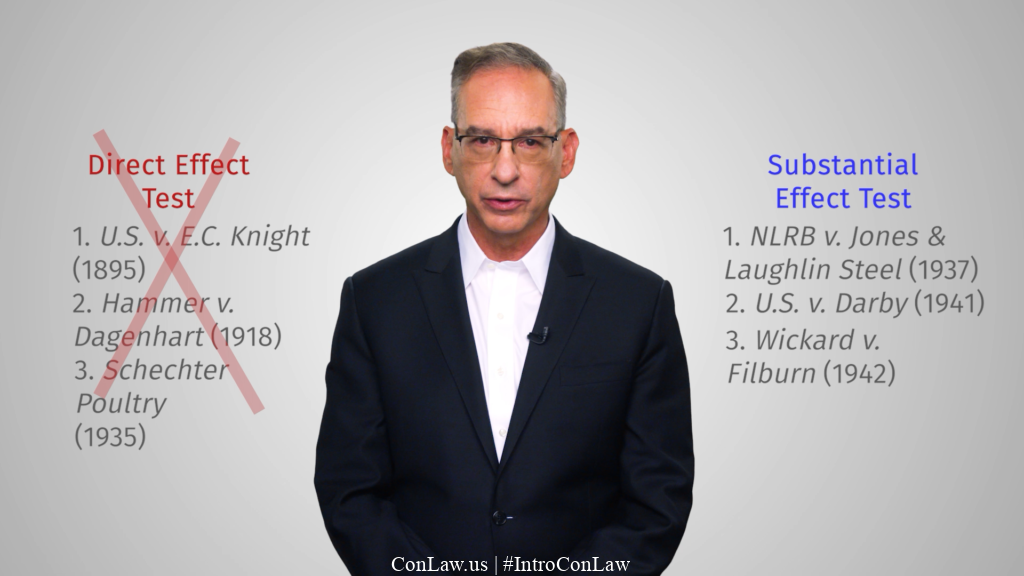 Source: conlaw.us
Filburn argued that because the excess wheat was produced for his own private consumption and never entered. View 22 Wickard v. It involved a farmer who was fined by the United States Department of Agriculture and contested the federal governments authority to regulate his activities. He was given a wheat acreage allotment of 111 acres under a Department of Agriculture directive which authorized the government to set production quotas for wheat. Moghadam finding that home consumption of wheat by every person in the United States would decrease demand for commercial wheat and would thereby defeat the purpose of the Agricultural Adjustment Act of 1938.
 Source: prezi.com
Wickard v Filburn case expanded the power of congress in regulating entities by providing that the power of Congress over interstate commerce is absolute and unrestricted and it may be applied to the fullest extent possible. Justice JACKSON delivered the opinion of the Court. Filburn argued that because the excess wheat was produced for his own private consumption and never entered. Note that the Supreme Court seems to say Congress can compel an individual to purchase wheat when the individual could grow wheat for personal consumption. Filburn an Ohio farmer who harvested wheat for home consumption and for sale was fined 117 for violating a federal scheme devised to limit wheat production.
 Source: bjmcpune.org
WICKARD Secretary of Agriculture et al. Chief Lawyers for the PetitionerAppellant. In fact the Supreme Court did not strike down another major federal law on commerce clause grounds until US v. Justice JACKSON delivered the opinion of the Court. Clark of Dayton Ohio for appellee.
 Source: quimbee.com
Summary of this case from US. Clark of Dayton Ohio for appellee. Case Summary of Wickard v. Moghadam finding that home consumption of wheat by every person in the United States would decrease demand for commercial wheat and would thereby defeat the purpose of the Agricultural Adjustment Act of 1938. Argued May 4 1942.
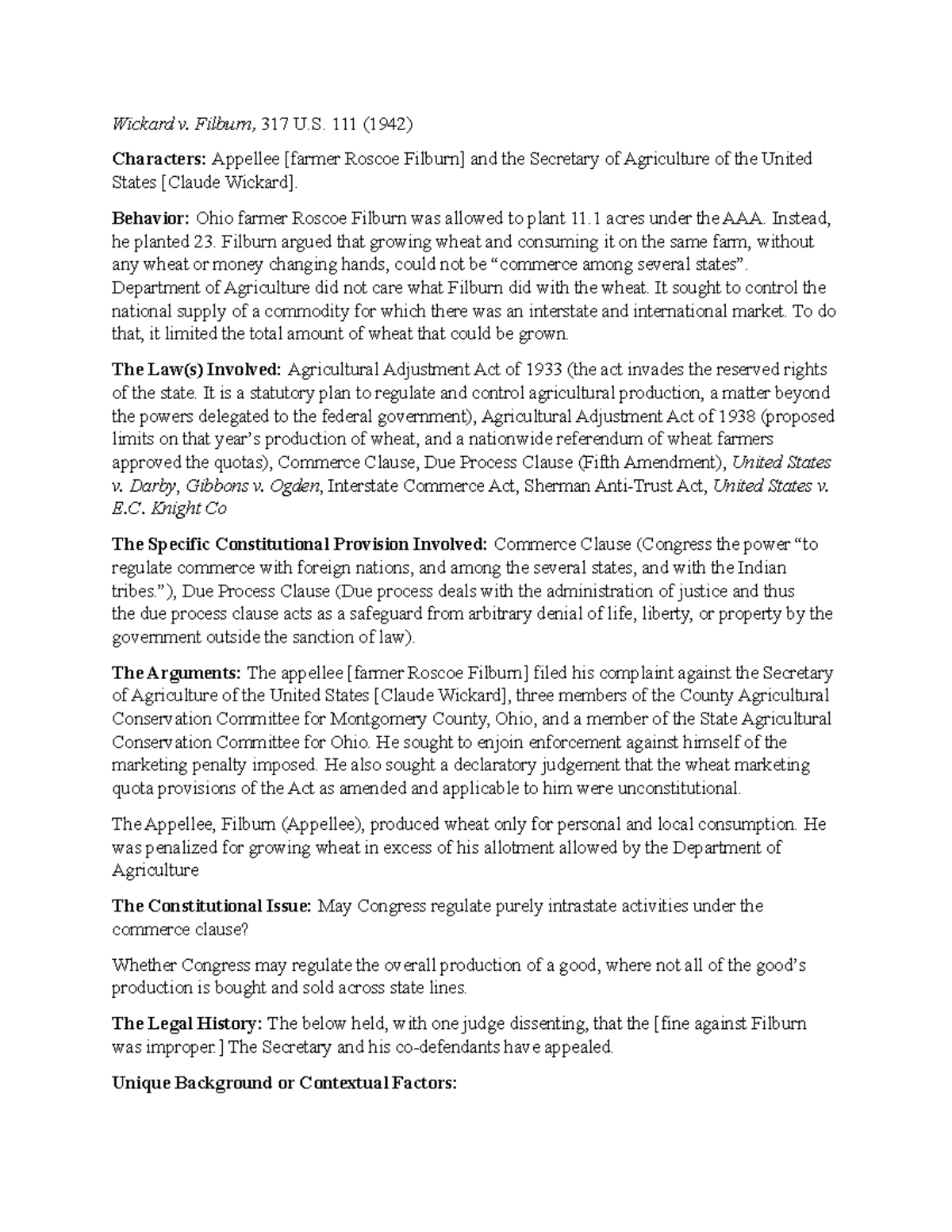 Source: studocu.com
Decided November 9 1942. Clark of Dayton Ohio for appellee. Decided November 9 1942. Filburn Now that Roosevelt made the Supreme Court blink first he wasted little time after the Parish decision and reintroduced the Agricultural Adjustment Act in. 15 On Appeal from the District Court of the United States for the Southern District of Ohio.
 Source: conlaw.us
Filburn argued that because the excess wheat was produced for his own private consumption and never entered. Here I will share with you the Wickard v Filburn case brief to help you understand. Clark of Dayton Ohio for appellee. In this case a unanimous court speaking through Justice Robert Jackson upheld important features of the. WICKARD Secretary of Agriculture et al.
 Source: conlaw.us
Here I will share with you the Wickard v Filburn case brief to help you understand. Chief Lawyers for the PetitionerAppellant. October 13 1942 Decided. Summary of Wickard v. Penalties were imposed if a farmer exceeded the quotas.
 Source: conlaw.us
The goal of the business interests that financed the legal challenge all the way to the Supreme Court was to convince the Court to declare the entire. Decided November 9 1942. He was given a wheat acreage allotment of 111 acres under a Department of Agriculture directive which authorized the government to set production quotas for wheat. Wickard v Filburn case expanded the power of congress in regulating entities by providing that the power of Congress over interstate commerce is absolute and unrestricted and it may be applied to the fullest extent possible. 122 1942 Brief Fact Summary.
 Source: teacherspayteachers.com
Court holds that he is bound by Congress wheat acreage and production allotment even though none of his wheat is sold in interstate commerce. He claimed that he wanted thewheat for use on his farm including feed for his poultry and livestock. Filburn argued that because the excess wheat was produced for his own private consumption and never entered. Summary of Wickard v. 15 On Appeal from the District Court of the United States for the Southern District of Ohio.
 Source: studylib.net
Source: studylib.net
He was given a wheat acreage allotment of 111 acres under a Department of Agriculture directive which authorized the government to set production quotas for wheat. Summary of this case from US. The goal of the business interests that financed the legal challenge all the way to the Supreme Court was to convince the Court to declare the entire. Court holds that he is bound by Congress wheat acreage and production allotment even though none of his wheat is sold in interstate commerce. Here I will share with you the Wickard v Filburn case brief to help you understand.
 Source: conlaw.us
View 22 Wickard v. Filburn harvested nearly 12 acres of wheat above his allotment. Westlaw Delivery Summary Report for 14IP DateTime of Request. 122 1942 Brief Fact Summary. The Agriculture Adjustment Act of 1938 and its 1941 amendments established quotas for wheat production.
This site is an open community for users to do submittion their favorite wallpapers on the internet, all images or pictures in this website are for personal wallpaper use only, it is stricly prohibited to use this wallpaper for commercial purposes, if you are the author and find this image is shared without your permission, please kindly raise a DMCA report to Us.
If you find this site convienient, please support us by sharing this posts to your preference social media accounts like Facebook, Instagram and so on or you can also bookmark this blog page with the title wickard v filburn summary by using Ctrl + D for devices a laptop with a Windows operating system or Command + D for laptops with an Apple operating system. If you use a smartphone, you can also use the drawer menu of the browser you are using. Whether it’s a Windows, Mac, iOS or Android operating system, you will still be able to bookmark this website.